



“We’re not managing money anymore — we’re managing direction.”
That message captured an important shift in the way finance leadership is being viewed across the Middle East.
The CFO role has traditionally been associated with control, financial accuracy, compliance, risk management and cost discipline. But as businesses become more complex and transformation moves faster, those responsibilities are only part of the picture.
Today, CFOs are increasingly expected to help shape strategy, support growth, lead transformation and connect financial decisions with the wider direction of the business.
This was one of the key themes discussed at the 4th Middle East CFO Vision & Innovation Summit in Dubai.
As we look towards the 5th Middle East CFO Vision & Innovation Summit & Awards 2026 in Riyadh, these lessons from the previous edition remain highly relevant.
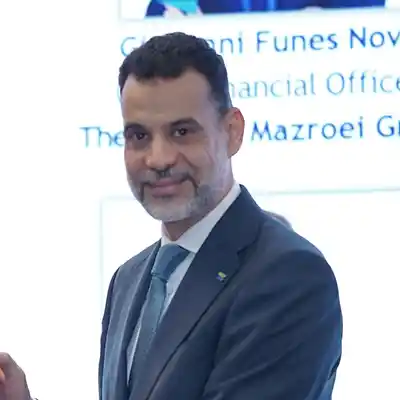
From Financial Custodian to Strategic Catalyst
The pace of change across the Middle East is creating a very different environment for finance leaders.
Economic diversification, technology, sustainability, infrastructure investment and changing investor expectations are all influencing the decisions businesses need to make.
In this environment, the CFO cannot simply report what has already happened.
They need to help the organisation understand what could happen next.
“The CFO must not just report performance. We must fund purpose.”
— Ali Abouda, Group CFO, Etihad Energy Holding
That means looking beyond financial control and becoming more involved in the decisions that determine where the organisation is going.
The shift can be seen in three areas:
Finance becomes foresight. CFOs are helping businesses anticipate change rather than simply respond to it.
Capital becomes confidence. Well-informed capital decisions give boards, investors and management greater confidence in the direction of the business.
Purpose becomes part of performance. Finance leaders are increasingly connecting financial decisions with wider business and transformation objectives.
What Does a Catalyst CFO Look Like?
Ali’s experience at Gulf Navigation Holding offered a practical example of this changing role.
The company's evolution from maritime operations towards logistics and storage demonstrated how finance can support a broader business strategy and identify opportunities beyond the traditional boundaries of the organisation.
The lesson goes beyond one company.
A modern CFO needs to understand the business from multiple angles — strategy, operations, risk, technology, people and capital.
“The CFO’s power lies in perspective. We see across every function — strategy, risk, operations, people. That means we have the responsibility to connect them.”
— Ali Abouda
That perspective gives the CFO an opportunity to become the person connecting different parts of the organisation.
Not simply controlling decisions.
Helping make better ones.
Five Ways CFOs Can Become Catalysts
1. Rethink What Finance Is There to Do
Cost discipline will always matter. But the conversation cannot stop at cost reduction.
CFOs need to ask where finance can help the organisation build new capabilities, improve decision-making and create sustainable growth.
“How can we reduce the cost?”
should become:
“How can we create more value?”
The catalyst CFO looks beyond controlling costs and focuses finance on building capabilities, improving decisions and creating sustainable value.
2. Bring Financial Thinking Into Strategy
Finance should not enter the conversation only when a strategy needs funding.
CFOs can help shape the strategy itself by connecting ambition with financial reality and understanding the potential return, risk and long-term impact of different choices.
Finance should be part of strategic thinking from the beginning — connecting ambition with return, risk and long-term impact.
3. Lead Transformation Beyond the Technology
Digital transformation is not simply an IT project.
Whether the organisation is investing in AI, automation, analytics or new systems, finance has an important role in understanding whether the investment is delivering the expected value.
Technology can enable change.
But people, accountability and leadership determine whether it lasts.
Technology enables change, but people, accountability and leadership determine whether transformation creates lasting value.
4. Build Relationships Beyond the Balance Sheet
The CFO's network is becoming just as important as the financial data on their desk.
Working with investors, regulators, business leaders, technology teams and other functions gives finance leaders a broader understanding of the environment in which their organisations operate.
Transformation rarely happens within one department.
The catalyst CFO builds relationships across the organisation and beyond it, because meaningful transformation rarely happens within one function.
5. Turn Data Into a Business Story
Numbers are important.
But numbers alone do not create alignment.
The CFO needs to explain what the numbers mean, what is changing, why it matters and what the organisation should do next.
“Finance is no longer about reporting — it’s about narrating.”
— Ali Abouda
That ability to turn financial information into a clear business story is becoming an increasingly important part of CFO leadership.
The modern CFO must turn financial information into a clear business story that creates alignment and supports better decisions.
The CFO Role Is Still Evolving
The shift from custodian to catalyst does not mean leaving financial discipline behind.
It means using that discipline to help the organisation move forward.
The strongest CFOs will continue to protect value while also looking for opportunities to create it.
They will challenge assumptions, connect functions, support transformation and help leadership teams make decisions with greater clarity.
That is where the CFO's influence is expanding.
Taking the Conversation Forward
The discussions at the previous edition in Dubai offered a clear view of how finance leadership is changing across the region.
But the conversation does not stop there.
The 5th Middle East CFO Vision & Innovation Summit & Awards 2026 will bring finance leaders together again in Riyadh to explore the next set of challenges and opportunities shaping the CFO agenda.
The upcoming edition will continue with new topics, fresh perspectives and deeper conversations around the issues that matter most to today's finance leaders.
From protecting value to creating it, the CFO is becoming a catalyst for what comes next.