



The role of the CFO is moving beyond budgets, reporting and financial control. Capital decisions are increasingly becoming part of a much larger conversation around business strategy, transformation and long-term growth.
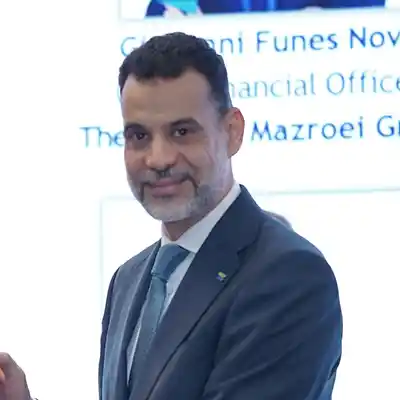
At the 4th Middle East CFO Vision & Innovation Summit, Ali Abouda shared a perspective that captured this evolution: finance leaders are increasingly responsible for helping determine the direction in which capital should move.
The question is no longer simply where an organisation can achieve the strongest financial return.
It is also about understanding where the business is heading and ensuring that capital supports that direction.
"We're not managing money anymore — we're managing direction."
— Ali Abouda, Group CFO, Gulf Navigation Holding PJSC
From Allocation to Alignment
Traditionally, capital allocation focused heavily on identifying where resources could generate the strongest financial return.
The conversation is now broader. CFOs are expected to understand where their organisations are heading, identify emerging opportunities and consider how investment can support sustainable growth.
This means finance must increasingly connect business ambition with capital allocation.
Capital decisions become more powerful when they are directly connected to the strategic direction of the organisation.
What the Previous Edition Highlighted
Ali Abouda's experience at Gulf Navigation Holding provided a practical example of how capital strategy can evolve alongside business strategy.
The company's evolution from a traditional maritime business towards logistics and storage reflected a broader view of where future growth opportunities were emerging.
For finance leaders, the lesson is straightforward: capital strategy needs to move with business strategy.
That requires CFOs to continuously examine three important dimensions.
Sector Focus
Where are the strongest long-term growth opportunities emerging, and how is the organisation positioned to participate in them?
Capital Strategy
How should funding support expansion, transformation, innovation and other strategic priorities?
Long-Term Thinking
Are financial decisions being made primarily around the next quarter, or are they supporting the next five to ten years of growth?
When capital strategy and business strategy move together, finance becomes part of shaping the organisation rather than simply approving investment.
Five Questions for CFOs
The discussion also highlighted five practical questions that finance leaders can use when thinking about capital allocation and strategic leadership.
1. Start with Strategy, Not Spreadsheets
Before allocating capital, finance leaders need to understand where the organisation is trying to go.
Whether the priority is technology, sustainability, infrastructure, expansion or entering new markets, finance needs to be part of the strategic conversation from the beginning.
Where is the organisation going, and what capital will be required to get there?
2. Build Frameworks, Not Just Forecasts
Markets change. Business priorities change. Opportunities change.
Finance leaders therefore need frameworks that allow organisations to respond to changing circumstances without losing financial discipline.
A practical approach is to connect:
Strategy → Execution → Monitoring
A continuous framework for capital decision-making
3. Connect Finance with the Wider Ecosystem
The CFO increasingly operates between different parts of the organisation and the wider business environment.
That means working closely with operations, technology, strategy, investors and other stakeholders.
Alignment becomes easier when finance understands what each part of the business is trying to achieve.
Finance creates greater strategic value when it understands the objectives and challenges of the wider business ecosystem.
4. Measure More Than Financial Return
Traditional ROI remains important, but it does not always capture the full impact of an investment.
Finance leaders are increasingly considering broader measures of value, including:
- Return on Impact
- Return on Trust
- Return on Transformation
The question is not only whether an investment generates a financial return. It is also whether that investment creates capabilities and momentum that support future growth.
The strongest investment decisions consider both immediate financial performance and long-term organisational value.
5. Make the Investment Story Clear
A strong capital strategy also requires a clear story.
Boards, investors and employees need to understand not only where capital is being invested, but why the investment matters.
When the purpose behind an investment is clear, organisational alignment becomes much easier.
Capital allocation becomes more effective when stakeholders understand the strategic purpose behind the investment.
What This Means for the CFO Going Forward
The central takeaway is that capital strategy cannot sit separately from business strategy.
The CFO has an important role in connecting the two.
That means understanding organisational ambition, challenging where capital is being directed, measuring whether investments are creating value and being prepared to redirect resources when priorities change.
Capital follows strategy. Strong CFO leadership makes sure the two move together.
Middle East CFO Community
Continuing the Conversation
The insights from the previous edition remain relevant as finance leaders across the Middle East navigate changing markets, new investment priorities, technology and long-term growth.
The next chapter of the conversation will continue at the 5th Middle East CFO Vision & Innovation Summit & Awards 2026.
Taking place on 26 August 2026 in Riyadh, Saudi Arabia , the summit will bring finance leaders together to explore where finance leadership is heading next and what CFOs need to be ready for.
Capital allocation is no longer simply a financial exercise. It is increasingly a leadership decision that connects ambition, strategy and long-term value creation.